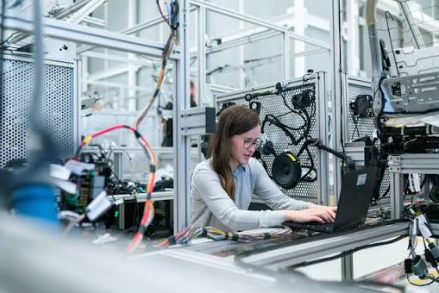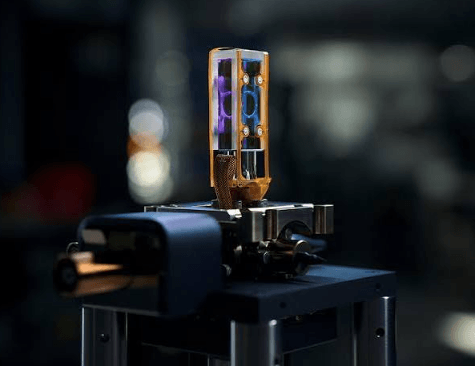

Environmental testing plays an important role in product development, quality control, research, and manufacturing. Before products reach customers, manufacturers often need to understand how materials and components respond to changing temperatures and other environmental conditions. Testing equipment allows engineers to create controlled conditions and observe how products perform.
For laboratories and businesses with limited workspace, compact equipment can be particularly useful. A small compact test chamber can provide a controlled environment while occupying considerably less space than larger industrial testing systems. This makes compact solutions practical for research laboratories, educational facilities, electronics testing, and product development areas where efficient use of space is important.
Why Environmental Testing Matters
Products may experience significant temperature changes during transportation, storage, and everyday use. Electronic components, plastics, batteries, automotive parts, packaging materials, and many other products can respond differently depending on environmental conditions.
Controlled testing helps engineers identify potential weaknesses before products are introduced to the market. Instead of relying only on real-world exposure, researchers can recreate specific temperature conditions inside a testing chamber.
This controlled approach can make testing more organized and repeatable.
See also: Tote Bag Buying Guide: Finding the Right Fit for Your Lifestyle
Advantages of Compact Equipment
Laboratory space is often limited. Large testing equipment may require dedicated rooms or substantial floor space. Compact chambers provide another option for organizations that need environmental testing capabilities without installing a large system.
A smaller unit can often be positioned on a laboratory bench or another suitable workspace. This can make it easier to integrate environmental testing into an existing laboratory layout.
Compact equipment may also be convenient for organizations that perform testing on smaller samples rather than large finished products.
Applications in Different Industries
Temperature testing is relevant across many industries.
In electronics, engineers may evaluate components under different temperatures to understand their operating behavior. In automotive development, selected materials and components can be tested under controlled environmental conditions. Pharmaceutical and packaging applications may also require carefully controlled temperature environments depending on the testing objective.
Research institutions can use compact equipment for experiments where precise environmental control is required.
The appropriate chamber depends on the sample size, temperature range, testing method, and other technical requirements.
Space Efficiency and Laboratory Planning
One of the biggest considerations when selecting laboratory equipment is available space.
A compact chamber can help laboratories make better use of existing work areas. Instead of reorganizing an entire room for a large testing system, researchers may be able to integrate a smaller unit into an existing workflow.
However, the physical dimensions of the chamber should not be the only consideration. Users should also allow sufficient space for ventilation, access, maintenance, and safe operation.
Temperature Control and Testing Consistency
Temperature stability is an important part of environmental testing. When a test requires a specific temperature, fluctuations can affect the consistency of results.
For this reason, users should review the chamber’s temperature range, control system, uniformity, and stability specifications before making a selection.
Different testing applications may require different levels of temperature control. A laboratory testing simple materials may have different requirements from a research facility evaluating sensitive electronic components.
Sample Size Matters
A compact chamber is especially useful when the test samples are relatively small.
Before selecting equipment, users should determine the dimensions and quantity of the samples that will be tested. The internal working space should be sufficient for the test setup without restricting airflow or creating unnecessary crowding.
Selecting a chamber based only on external dimensions can lead to problems if the internal workspace is not suitable.
Ease of Operation
Testing equipment should also be practical for everyday laboratory use.
An intuitive control system can make it easier for technicians and researchers to configure test conditions, monitor temperature, and repeat established testing procedures.
Documentation and operating instructions are also important. Staff should understand how to operate the chamber safely and how to respond if an unexpected condition occurs.
Maintenance Considerations
Regular maintenance helps laboratory equipment remain reliable over time.
Users should understand the recommended cleaning procedures, inspection requirements, and maintenance schedule before purchasing a chamber. Easy access to important components can also make routine servicing more convenient.
A well-maintained chamber can support consistent laboratory workflows and reduce avoidable interruptions.
Selecting Equipment for Long-Term Use
Choosing testing equipment should be approached as a long-term decision rather than simply a short-term purchase.
Users should consider current testing requirements as well as possible future applications. If a laboratory expects to test larger samples later, purchasing a chamber that is too small may eventually require another investment.
On the other hand, selecting equipment that is unnecessarily large can consume valuable space and resources.
A balanced approach is to identify the actual testing requirements and then compare equipment specifications carefully. Information about a small compact test chamber can help users understand the type of compact environmental testing solution available for laboratory applications.
Safety and Installation
Before installation, users should review the manufacturer’s requirements for electrical supply, ventilation, operating conditions, and placement.
The chamber should be positioned on a stable surface capable of supporting its weight. Adequate clearance should also be provided where required.
Laboratory personnel should follow the manufacturer’s operating instructions and established workplace safety procedures.
Frequently Asked Questions
1. Who can benefit from compact environmental testing equipment?
Research laboratories, universities, electronics companies, manufacturers, and product development teams may benefit when they need controlled temperature testing but have limited workspace.
2. How should chamber size be selected?
The internal chamber volume should be matched to the dimensions and number of samples being tested. Users should also consider the space needed for fixtures and airflow.
3. Is temperature range the only specification to consider?
No. Temperature stability, uniformity, internal volume, control functions, installation requirements, maintenance, and application-specific features should also be evaluated.
Conclusion
Compact environmental testing equipment can provide practical benefits for laboratories that need controlled temperature conditions without dedicating large amounts of space to testing infrastructure. By considering sample size, temperature requirements, operating controls, maintenance, and installation conditions, organizations can select equipment that fits their actual workflow.
The right testing chamber should support reliable testing while remaining practical for the laboratory environment. Careful evaluation of technical specifications and future requirements can make the purchasing decision more efficient and useful over the long term.


 By



 By