
Installing a sauna heater correctly means three things working together: a dedicated 240-volt circuit for anything above roughly 6 kilowatts, a stable and properly rated floor or pad beneath it, and manufacturer-specified clearances on all sides plus the ceiling. Skipping any one of these is the most common way a heater fails inspection, voids its warranty, or becomes a genuine fire hazard. Budget $300 to $800 for the electrical work alone, on top of the heater’s purchase price, before ordering.
What Electrical Circuit Does a Sauna Heater Need?
Most residential heaters above 6 kilowatts require a dedicated 240-volt circuit with no other outlets or appliances sharing the same breaker, typically sized to a 30 to 50 amp double-pole breaker depending on the heater’s rated amperage draw. This circuit has to run from the electrical panel to the heater’s control location, and in most jurisdictions that wiring must be done, or at minimum inspected, by a licensed electrician. Smaller plug-in infrared or compact heaters under about 1,800 watts are the exception and can run on a standard 15 or 20 amp household outlet, which is why they are the more realistic DIY-electrical option for a first sauna.
Does a Heater Need Its Own Foundation or Pad?
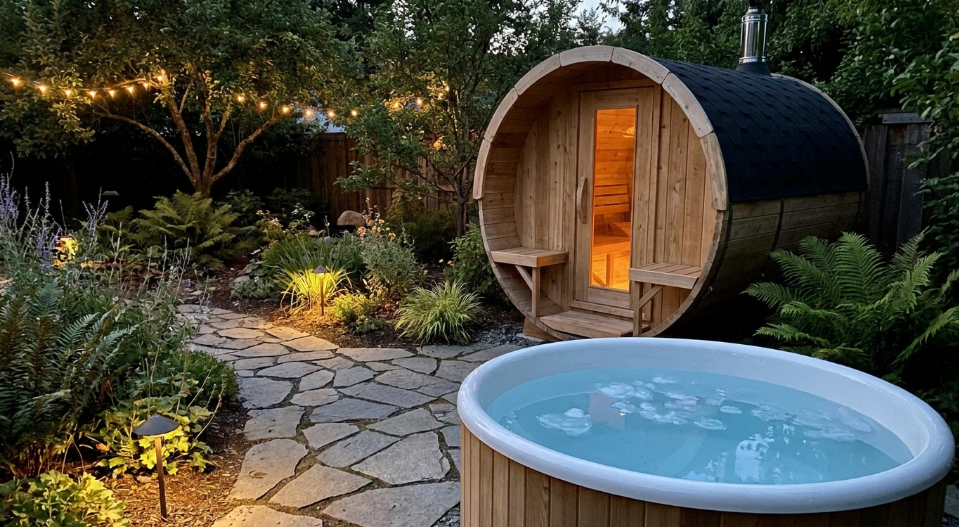
An indoor heater, mounted inside an existing bathroom or basement cabin, generally needs only a fire-rated, non-combustible floor protector directly beneath and around it rather than a separate foundation, since the surrounding structure already provides adequate support. An outdoor cabin is a different project entirely: it typically needs a level concrete pad, paver base, or pressure-treated foundation frame to keep the whole structure stable, properly drained, and resistant to shifting over freeze-thaw cycles. Skipping a proper pad in favor of setting a cabin directly on soil or loose gravel is a common cause of doors that stop closing squarely within a year or two.
What Clearances Are Required Around the Heater and Stones?
Every heater’s installation manual specifies exact clearance distances, and they are not interchangeable between models. Typical figures call for several inches of clearance on the sides and back of the unit, a somewhat larger distance at the front where the guard rail or fence sits, and a specific minimum distance up to the ceiling, often 3 feet or more depending on wattage. These numbers exist because the heater surface and the rocks it holds reach temperatures well above what nearby wood paneling can safely contact directly. Ignoring the manufacturer’s stated clearances is both a fire-code violation in most areas and one of the fastest ways to void a heater warranty, since manufacturers can and do deny claims tied to non-compliant installation.
Can You Install a Sauna Heater Without an Electrician?
For a small plug-in unit under roughly 1,800 watts, yes, since it uses a standard household outlet within the appliance’s rated draw. For anything requiring a new 240-volt circuit, which covers most heaters above 6 kilowatts, the honest answer in most jurisdictions is no, both because local code typically requires a licensed electrician for new high-voltage circuits and because a mistake on a circuit feeding a high-heat appliance is a real fire risk, not a hypothetical one. Buyers comparing heater wattage against installation requirements before ordering, including checking specification sheets where sellers see the full lineup alongside stated circuit requirements, can plan the electrician cost into the budget from the start rather than discovering it after the heater arrives.
What Inspection Steps Come After Installation?
Most jurisdictions that require a permit for the new circuit also require a final electrical inspection before the heater goes into regular use, which typically checks breaker sizing, wire gauge, and proper grounding. Beyond the code inspection, it is worth doing a personal check the first few times the heater runs: confirming it reaches target temperature within the expected 30 to 45 minutes, that no unusual smell persists beyond the first break-in session, and that all stated clearances are holding as installed rather than having shifted during final trim work. Catching a clearance or wiring issue in the first week is far easier to fix than after months of regular use.
What Does the Research Say About the Payoff for Doing This Correctly?
A correctly installed heater is what makes years of consistent sauna use realistic, and the evidence on frequency is one of the stronger arguments for getting the installation right the first time. A large Finnish cohort study found men using a sauna four to seven times weekly had lower rates of cardiovascular mortality than men using one once weekly, an association that held after adjusting for other risk factors. A 2023 review in Mayo Clinic Proceedings examined whether sauna use combined with other lifestyle factors added further benefit. These are population-level associations, not proof for any one household, but a heater installed to code, on proper footing, with correct clearances, is the version of a sauna actually built to support years of the frequent use these studies describe.
What Permits Does a Sauna Heater Installation Typically Require?
Most jurisdictions require an electrical permit for any new 240-volt circuit, regardless of whether the heater is going into an existing indoor space or a new outdoor cabin, and outdoor structures often need a separate building permit for the cabin itself depending on its size and whether it is considered a permanent structure. Skipping permits to save time or a modest fee creates real downstream problems: unpermitted electrical work can complicate a future home sale, since a buyer’s inspector may flag it, and it can also give an insurer grounds to deny a claim if the heater is later involved in a fire, regardless of whether the wiring itself was actually done correctly. Checking with the local building department before work starts, rather than after the cabin is built, is a small step that avoids a much larger one later.
What Should You Confirm Before the Heater Ships?
Before ordering, it is worth confirming three things in writing: the heater’s exact amperage draw and required breaker size, the manufacturer’s minimum clearance dimensions for the specific model, and whether the seller’s stated installation guidance matches local code in your area, since some manufacturer minimums are more conservative than code and some are less. Measuring the intended cabin space against both the heater’s rated room size and its clearance requirements before the unit arrives prevents the frustrating scenario of a heater that has to be returned or exchanged because it does not physically fit the space as installed.
Frequently Asked Questions
What electrical circuit does a sauna heater need? Most heaters above 6 kilowatts need a dedicated 240-volt circuit, typically a 30 to 50 amp double-pole breaker, wired by a licensed electrician.
Does a sauna heater need its own foundation or pad? Indoor units usually need only a fire-rated floor protector; outdoor cabins typically need a level concrete pad or pressure-treated foundation.
What clearances are required around a sauna heater? Several inches on the sides and back, more at the front guard rail, and a specific minimum ceiling distance, all set by the manufacturer’s manual.
Can a homeowner install a sauna heater without an electrician? Only for small plug-in units under about 1,800 watts. Anything needing a new 240-volt circuit requires a licensed electrician in most areas.
References
- Does the Combination of Finnish Sauna Bathing and Other Lifestyle Factors Confer Additional Health Benefits? A Review of the Evidence, Mayo Clinic Proceedings, 2023
- Cardiovascular and Other Health Benefits of Sauna Bathing: A Review of the Evidence, Mayo Clinic Proceedings, 2018
- Clinical Effects of Regular Dry Sauna Bathing: A Systematic Review, Evidence-Based Complementary and Alternative Medicine, 2018


 By
By


 By
By